Showing posts with label Serotonin. Show all posts

Wednesday, January 31, 2007

Loneliness causes stress and ill health

Now that the holidays are over, the rounds of parties and family gatherings done, you have returned to your regular routine, do you find yourself isolated, disconnected, lonely?

You're not alone in being lonely. More people live alone today than ever before. In 1950 only 10% of Americans lived in a one-person household; according to the most recent census figures, that number has risen to 25% - 27.2 million households. A study printed last summer in "The American Sociological Review" revealed that the number of trusted friends an average person had dropped from about three friends in 1985 down to two. The number of people who admitted to having no close friend to talk to or confide in at all was a whopping twenty-five percent! Another nineteen percent said they had only one close person with whom they could discuss personal matters, and that one was usually a spouse. If they lose that one person, it would create a devastating hole in their lives.

Oddly enough, the thing that gives people the widest range of connectivity may also be causing the highest level of personal isolation: the internet. Instead of getting out and meeting the new neighbors, people stay inside and email an old friend across the country. Instead of getting out and meeting other students, college freshmen often stay in their rooms and chat online with friends from high-school. It's not all internet use, of course. Young children stay inside and play video games instead of going outside to play with their friends, and the elderly often can't get around easily enough on their own to get out and connect with other people.

This kind of isolation and disassociation can lead to a host of illnesses for those of you in your middle and later years, and often manifests as anxiety and depression.

One of the most severe illnesses that is seriously affected by loneliness in middle-aged and older Americans is heart disease. In and of itself, heart disease can cause depression over your health and high levels of anxiety over your health-care and financial situation. After a heart attack or stroke, many patients recover more slowly or suffer further illness if they are isolated.

"A study of heart attack survivors showed that men who lived alone had twice the average death rate in the first year. Another large study found that people were more likely to die in the nine years after a heart attack, regardless of their physical condition, if they did not talk to their doctors, rarely visited friends or family, and did not belong to a voluntary organization.

"What matters, apparently, is not so much the size of a person’s social circle as a belief that help will be available when needed. People who say they lack friends in times of need are more likely to die or have a recurrent cardiovascular event, whether they are living alone or not. One study found that hospitalized female (although not male) patients with heart failure were more likely to avoid rehospitalization and death if they had someone to discuss their problems with and to help them make decisions." Source: Harvard Medical International)

Loneliness is not just about connecting with people – you can do that online quite effectively. It is about being with other people and getting that good, healthy dose of friendly, "I care about you and what happens to you" energy. There is a lot to be said about being in the company of friends where you can see the smiles, hear the laughter, feel the touch on arm or shoulder, share the hug at the end of the evening – and, yes, that one goes for you guys, too! Lonely people often don't take good care of themselves; they don't eat well or sleep well, the don't get proper exercise, they just "veg out" which is certainly an apt description of someone whose mental and physical functions are allowed to atrophy.

Participating in an active network of friends is so health-full! It reduces blood pressure, reduces anxiety and depression, and reduces stress hormones; it also helps to reduce bad cholesterol which can be raised by stress as well as poor eating and exercise habits. It boosts the immune system, and makes you happy which also brings a host of positive and healthy "side effects" like a longer life, raised levels of good hormones like serotonin, better mental and physical function; it helps you break bad habits, encourages attendance at social functions which encourages exercise (at the very least, you have to walk from your car to the site of the function!). Just knowing you have a few people you can call upon in case of emergency or talk to when you need to bend an ear, can make a huge difference in your level of health and wellbeing.

So, how do you get yourself out there? There are so many different possibilities; either join or start a hobby group. If you need a place to meet, check with your local public library – they often have available a room or two for local group meetings. They also are a good source on community happenings and you may find an established social group by asking at the library. If you can't find a group that supports your interests, start one! Figure out what kind of people you want to bring together, create a flexible schedule of meetings (depending on the schedules of the people who are interested in joining, you may need to revise your meeting schedule if you want them to participate), and have a suitable place to meet; the local library for a writers' group, a nearby empty field for a radio-controlled airplane group, etc. If you can, include healthy snacks…good food seems to be a universal facet of good companionship. When you have the foundation set, put an ad in the personals section of the newspaper with a brief description of the proposed group's interests and a contact number, put up fliers at the library, store, any shop that might cater to people with this interest (i.e. a flier in a hobby shop for people interested in joining that RC airplane group), your church bulletin if they allow announcements like that. Be ready to answer the phone…you are sure to find a few people who share your interests!

One of the best ways to meet other people and also help other people and your community is to become a volunteer. There are so many places in need of help, and so many ways to share your talents with others – schools, hospitals, shelters, Big Brother and Sister groups, Little Brother and Sister groups (I recently read about one of these in Boston, MA – each member "adopts" a senior citizen in need of companionship – what a great idea!), sports groups for kids, Meals On Wheels….the list is almost endless.

There is another perspective on loneliness, too. If you aren't the lonely one, you probably know someone who is; don't wait, don't say, "Oh, I should call so and so, I'll do it next week"….reach out right now and call that person, offer to include him or her on your next trip to the grocery store, or offer to take them out to lunch, or treat them to a movie once in a while. For a small investment in time, you will make a huge difference in another person's health and wellbeing.

So, get out there, have fun, and enjoy your new friends!

Sunday, January 28, 2007

Holistic Ways to Cure Insomnia


Whether you suffer occasional or chronic insomnia, you often turn immediately to pharmaceutical sleep aids to get the rest you need, but this should not be your first line of offence against sleeplessness.

For one thing, the side effects can be devastating. They interfere with daytime brain cell activity and reduce short-term memory function; are highly addictive; affect lung tissue function; impair reaction time when awake; can impair physical motor function by making you clumsy and accident prone, and experience difficulty manipulating objects or completing tasks; do not cure or even improve insomnia. In fact, one study evaluating a survey of over 2,000,000 people found that extensive use of sleeping pills was as deadly as cigarette smoking. (source: Apollo Health)

Even though sleep aids put you to sleep, their use does not allow your body to relax through the four stages of sleep, and that effectively robs you of one of the most curative properties of sleep, the progressive relaxation of the muscles and the effect that has on your body systems; for example slower respiration and heart rate. Taking a sleep aid that robs you of experience of the four stages of sleep is like jumping down the elevator shaft instead of waiting for the elevator car – sure, you get to the bottom (to sleep), but at what cost to your health and wellbeing?

The quality of your sleep is important, too, not just the fact you are unconscious. A normal sleep pattern includes the four stages of relaxation sleep and one stage of REM sleep, Rapid Eye Movement, the dream stage of sleep. This cycle repeats approximately every ninety minutes throughout the night, so that you should experience four to five cycles with each night's sleep. Without experiencing the requisite number of these complete sleep cycles, including REM sleep, you will not experience the rejuvenating rest you need to help heal your body and restore your energy. Lack of proper sleep and rest can lead to serious illness.

Growth hormone is at its highest level during sleep, and is responsible for the increased rate of nutrient and amino acid absorption into your blood stream, aids the healing of tissue, and stimulates production of immune system cells. Additionally, irregular sleep cycles disrupt your body's manufacture of the hormone melatonin. "Melatonin also acts as a powerful antioxidant to clean our cells of toxins. When we don’t sleep well, our bodies don’t use melatonin efficiently and we can suffer from premature aging, heart risks and cancer. Low nighttime levels of melatonin may cause higher levels of estrogens and breast cancer in women as well as colon and bone cancer in men. Melatonin imbalances are also believed to be a cause of depression." (source: Apollo Health)

Uninterrupted sleep is important, too. A group of medical students at the University of Toronto Center for Sleep and Chronobiology agreed to have their sleep interrupted in a study on the natural rhythms of sleep. After a few nights of being awakened during their deep sleep levels, the volunteers developed symptoms of chronic fatigue syndrome and fibromyalgia.

To insure you have an excellent, restorative night's sleep, here is a list of effective, holistic sleep aids that you will find beneficial.

1 Spend some early-morning time in bright light; outside in sunlight is best if possible. This stirs you fully awake and helps to regulate your inner clock so that you will be sleepy at night. Any amount of time you can spend soaking up some natural sunlight will benefit your health and wellbeing.

2. Get some exercise a few hours before bed. A walk after dinner in fresh air is perfect; you get exercise and it aids digestion. Avoid going to bed on a full stomach; it will make you uncomfortable and often leads to indigestion. Don't exercise too close to bedtime; it will keep you awake. Contrary to popular belief, exercise is a pick-me-up and a perk-me-up, it does not make you tired or sleepy!

3 Take a warm bath or shower. Relaxing in warm water for ten to twenty minutes before retiring for the night relaxes muscles which gets you ready for sleep. (My husband happened to take a shower this morning and commented that he felt like taking a nap after basking in the warm waters!)

4 Have a small snack. My earlier article on chocolate pointed out that chocolate triggers the release of endorphins, your body's natural "feel good," relaxing, pain relievers. A cup of hot cocoa could be just the thing to help you sleep. A carbohydrate snack would be good, too; carbohydrates help your brain produce serotonin, another hormone that produces relaxation. (See How to Eat Right to Reduce Stress and Friday Food Pharmacy: Pasta and Other Grain Products.) Alternatively, a cup of herbal tea containing ingredients for relaxation may be appropriate – try chamomile, lavender, or lemon balm. (These three herbs are very easy to grow in the garden, or indoors in pots. What could be better than a cup of tea made with fresh herbs?!) Always sweeten with natural ingredients if you need sweetener; avoid the use of sugar.

5 Go to bed at the same time every night. The body is a creature of habit even if the mind is not. Going to bed at the same time every night will develop a good habit and train your body to be prepared for sleep when you climb between the covers.

6 Go to sleep in silence, and in the dark. Even though you think it doesn't, playing the television or radio does disturb your sleep with unusual or unexpected noises and sounds during the night. If you must have sound to lull you to sleep, try a white noise machine, or put the tv/radio on a timer so it will shut off 30 to 45 minutes later. That should give you enough time to drift off to sleep. You do not want to leave a television on all night while you sleep. The light from a television is bright enough to interfere with the production of melatonin; the health risks of low levels of melatonin were discussed above. Sleep experts say that any light brighter than a nightlight can impede melatonin production. For the same reason, if your digital clock has exceptionally bright numerals, turn the face of the clock away from the bed.

7 If you find yourself tossing and turning, get up. Again, you can train your body to sleep in bed by getting out of bed if you can't sleep. Go into another room and read a book for a few minutes, play a game of solitaire, get a snack, write down a list of the things that are keeping you awake. Sometimes the reason you can't sleep is that things from the day are bothering you, or you don't want to forget things that must be done the next day. Making that list will allow your mind to relax, let go of the things troubling you, and you can rest assured that you won't overlook an important task or appointment the next day.

8 Follow the instructions in the Progressive Relaxation Technique posted here last July. This is one of the best relaxation techniques I have ever used both for myself and with clients.

9 Try a visualization. Imagine yourself in a beautiful, relaxing setting, a lazy evening on the beach watching the moon rise, an evening in the forest listening to the crickets chirping, or any other quiet and restful setting. You can even create a story about the wonderful day you just had, the relaxing and enjoyable things you are going to do tomorrow. Beware of creating too much excitement, though. Your body responds to your thoughts as if they were real commands sent to your muscles for action, so if you imagine yourself hiking through the jungle, you are only going to excite muscles you want to relax.

10 Make sure the room is a comfortable temperature. Most people sleep better in a cool room; if your room is even a few degrees too warm, it can make a difference. Try turning the temperature down to the 65 degree range (18 degrees C.) Likewise, make sure your bedclothes are of the right fabric weight for the season, and don't make you too warm. Keep the window open, at least a little, if it isn't too cold or hot outside; most people sleep better with some fresh air at hand.

11 Check the firmness of your mattress and pillows; make sure your sheets and blankets are soft, not scratchy. Sleep surfaces that are too firm, too soft, or otherwise not quite right can cause enough discomfort to wake you during the night, interrupting those very important and restorative sleep cycles. Also, some people are sensitive to foam pillow stuffing, so if you are sleepy but have trouble falling asleep, or if you wake during the night for no apparent reason, try a pillow with a different (perhaps more natural) stuffing material.

I'll leave you with these holistic words of wisdom from WebMD: "Overlooking the single most important thing you can do for your health is easy with all the clamor surrounding various health products in the marketplace. But good-quality sleep goes far and beyond those products when it comes to restoring your health. And best of all, sleep is free."


Monday, January 22, 2007

Antidepressants may raise bone risk

[There are so many great holistic ways to counteract depression, you owe it to yourself to at least try the safer methods with few or no side effects before you go putting your bones at risk. Michelle]

Antidepressants may raise bone risk

By LINDSEY TANNER, AP Medical Writer
22 January 2007

CHICAGO - The most popular pills for depression might substantially raise the risk for bone breaks in older people, a drawback that should be considered when the drugs are prescribed, Canadian researchers say.

People aged 50 and older who took antidepressants, including Zoloft, Prozac and other top-sellers, faced double the risk of broken bones during five years of follow-up, compared with those who didn't use the drugs, the study found.

Still, few of 5,008 people studied used the drugs and had fractures. While more rigorous research is needed to prove the link, the study provides the strongest evidence yet tying these drugs to fracture risks, said Dr. David Goltzman, an endocrinologist at McGill University in Montreal and one of the study authors. The study was part of ongoing osteoporosis research funded partly by the Canadian Institutes of Health Research and makers of osteoporosis drugs.

Antidepressants have been linked with low blood pressure and dizziness leading to falls, which can increase risks for broken bones, but the researchers said they found fracture risks independent of those factors.

Research in animals suggests that the pills might have a direct effect on bone cells, decreasing bone strength and size, Goltzman and colleagues said.

The results have important public health implications since millions of people worldwide use the drugs and because osteoporosis, a bone-thinning disease that can lead to broken bones, can be so debilitating for older adults, Goltzman said.

Still, the researchers said potential fracture risks should be balanced against the drugs' effectiveness at treating depression, which also can be debilitating.

Depression affects about 10 percent of U.S. adults, or nearly 30 million people, including about 7 million aged 65 and older. Depression in older adults is often missed and untreated.

"If patients need these drugs, they should not be advised against taking them because of the fracture risk. They should however be warned about the risks," Goltzman said.

The study appears in Monday's Archives of Internal Medicine.

Some previous studies found similar results but did not adequately consider other factors, the researchers said.

Dr. Gregory Asnis, director of an anxiety and depression clinic at Montefiore Medical Center in New York, said depression itself has been linked with low bone density, and it's possible the disease rather than the drugs could explain the findings. He said more rigorous research is needed.

The drugs in question are called SSRIs or selective serotonin reuptake inhibitors. These are generally the favored treatment for depression in many patients and their combined U.S. sales jumped 32 percent from 2000 to 2004, to more than $10.9 billion, the researchers said.

The study tracked 5,008 Canadians aged 50 and older for five years. They included 137 people who reported using SSRI antidepressants daily. In this smaller group, 18 people or 13.5 percent had bone fractures during the follow-up, compared with 317 people with fractures or 6.5 percent among the 4,871 who didn't take the pills.

Broken forearms, ankles, feet, hips and ribs were the most common fractures.

Amy Sousa, a spokeswoman for Prozac maker Eli Lilly and Co., said the drug's label lists osteoporosis as a potential but rare side effect. Still, she said the new study was too small to establish any proof that SSRIs might cause fractures.

Pfizer Inc., maker of Zoloft, issued a statement responding to the study and calling depression "a serious problem in the elderly that is under-diagnosed and under-treated."

"SSRIs are an important option for the treatment of depression in this population. As the authors note, the risks must be balanced against the benefits gained by the treatment of depression," Pfizer said.

___

On the Net:

Archives: http://www.archinternmed.com

Friday, November 24, 2006

Friday Food Pharmacy: Pasta & other grain (& sometimes fruit) products

Keep your energy up and your stress down: eat pasta!


At this busy time of year, it is especially important to take care of yourself, eat right, and get enough quality sleep. You already know that complex carbohydrates like those found in grain products (pastas, breads, and cereals) are great energy foods. What you might not be aware of is that they can also be good sources of useful tryptophan, the amino acid that produces the neurotransmitter serotonin which aids in relaxation and sleep, and helps to relieve depression.

There are many foods that contain tryptophan; however as with many nutrient interactions, some sources are better than others to initiate the proper response of your body chemistry to produce the desired result: promoting relaxation.

As it enters your bloodstream through the digestive process, tryptophan can get side-tracked by the amino acids tyrosine, phenylalanine, valine, leucine and isoleucine. When that happens, it reduces the amount of tryptophan available to travel to your brain to create serotonin. Eating carbohydrate-rich foods causes your body to release insulin. Insulin helps to clear some of those competing amino acids out of your blood allowing more of the tryptophan to travel to your brain.

Tryptophan, like all the amino acids, is most abundant in meats, fish, poultry, dairy products, and nuts. However, flesh, dairy, and nut sources do not initiate the same insulin-releasing chemistry that carbohydrates do, and so do not keep the other amino acids from hijacking the tryptophan. Eating proteins will give you energy and perk you up, it won't be the relaxing type of energy you receive from eating carbohydrates. For example, eating a bagel as a bedtime snack is a great idea, but only add salmon and cream cheese on a breakfast, lunch, or afternoon-snack bagel because the proteins contained in those toppings will make you more alert, not sleepy.

You may make an exception in the case of the cream cheese, or you may want to have a cup of hot cocoa with your bagel since there is evidence that calcium helps the manufacture of tryptophan into the other sleep hormone melatonin, an important product of your endocrine system. To digress for a moment: It has been proposed that a lack of melatonin is a significant factor in the higher rates of cancer in people who work at night because they often experience low levels of this powerful antioxidant. Darkness is required for the production of melatonin, and excessive or lengthy illumination can reduce its production. Read more about melatonin at Wikipedia.

Following is a chart I created of popular selections of grain foods: pastas, cereals, bread, and pies (yes, pie is a great choice for carbs and a good carb-to-protein ratio). These items have a satisfactory level of carbohydrates, and a reasonable ratio of carbohydrates to proteins. I've marked the best of the pasta, pie, and breads class with an asterisk, but beware of the high calories of the pies! The cereals section is there for comparison but some of the information is unavailable, so I did not indicate a asterisk a "best source" in that group.

Food

Serving

Size

Calories

in Kcal

Carbohydrates

in Grams

Protein

in Grams

Tryptophan

in Grams

Pasta


Spaghetti / macaroni

1 cup

221

43.20

8.12

0.113 *

Spaghetti – whole wheat

1 cup

174

37.16

7.46

0.097

Spaghetti – spinach

1 cup

182

36.61

6.41

0.081

Egg noodles

1 cup

221

40.26

7.26

0.069

Pasta Sauce – for those of you who couldn't survive bare pasta:
Prego 100% Natural Spaghetti Sauce (jar)

2 Tbsp

136

20.80

2.21

N/A

Pie


Pecan pie

1/6 pie

452

64.64

4.52

0.073 *

Pumpkin pie

1/6 pie

229

29.76

4.25

0.056

Cherry pie

1/6 pie

304

46.57

2.34

0.033

Blueberry pie

1/6 pie

271

40.83

2.11

0.029

Cereals


General Mills Cheerios

1 cup

110

22.78

3.00

0.048

General Mills Whole Grain Total

¾ cup

100

23.15

2.00

0.039

Kellogg's Raisin Bran

1 cup

195

46.54

5.18

N/A

Quaker Instant Oatmeal – Raisin Spice

1 packet

162

32.92

3.35

N/A

Breads


Bagel – cinnamon raisin

4" diameter

243

49.13

8.72

0.101 *

Biscuit – home made

4" diameter

357

45.05

7.07

0.088

Pumpernickel

1 slice lg.

335

15.20

2.78

0.031

Rye

1 slice

83

15.46

2.72

0.031

Whole wheat

1 slice

69

11.56

3.63

0.023

White

1 slice

66

12.65

1.91

0.022

You may also like to read (or re-read) the "How to eat right to reduce stress" article reprinted with permission from the PCRM (Physicians Committee for Responsible Medicine) website.


This column is dedicated to my son Steven who would live entirely on pasta and cereal if he could. :-) Happy Thanksgiving, Steven!

Friday, November 17, 2006

Friday Food Pharmacy: Turkey

The United States will celebrate Thanksgiving next Thursday, and many people are looking forward to a traditional family dinner featuring turkey. I hope you will take the time to find, and spend the extra money to purchase, an organic turkey which is bred with as few added hormones and antibiotics as possible, and slaughtered humanely. Not only is that better for the turkey, it is much, much better for you, too, because studies show that the additional hormones and antibiotics from meats and poultry do upset your own chemical balance and cause health problems. If you're not sure, visit the company's website, email, or call the producer. So many things labeled "organic" and "natural" are that way in name only. Loopholes in the laws and watered-down definitions allow food product producers to get away with labeling a product as wholesome without providing either the wholesome environment or product.

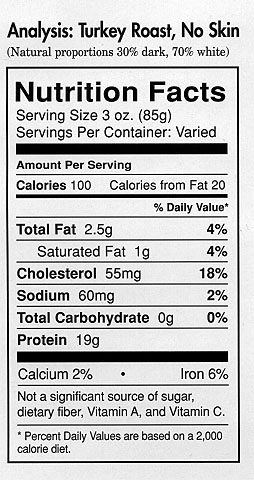
That said, of all the meats, turkey (especially white meat) is the best for you in terms of low fat and high protein and nutrients. It is the best source of tryptophan, the amino acid that is carried to your brain to be turned into serotonin, the relaxing and "feel good" brain chemical believed to be low in people who suffer from depression. Turkey is also a good source of iron, zinc, niacin, potassium, and many important amino acids. (See the nutrient chart below, too.)

I would, however, like to dispel an urban legend: many people believe that the tryptophan you ingest by eating turkey on Thanksgiving makes you sleepy. Not true. You would have to eat three or four whole turkeys by yourself to ingest enough tryptophan to make you sleepy. It's far more likely that what makes you sleepy after dinner is the amount of food intake (there's always someone urging you to "have s'more" of everything!) and the fact that eating a meal with great friends and family keeps you at the table longer so you really do eat more, often without even realizing it!

For any last-minute turkey-cooking crisis you may experience, aid is just a phone call away, and is available in both Spanish and English. You can call The Turkey Talk Line often referred to as the Butterball Hotline at 1-800-BUTTERBALL (1-800-288.8372.255 Yes, I realize there are extra digits in the phone number. Just keep punching numbers until something rings!)

Operating hours for the Talk Line are:
Thanksgiving day 6:00 AM to 6:00 PM Central Standard Time
Christmas Eve and Christmas Day 6:00 AM to 3:00 PM Central Standard Time

Enjoy the fun and interesting turkey facts that follow the nutrients chart below!


Here are the statistics from the USDA Nutrient Database for one serving of turkey – about 3.5 ounces which, I've read, is a stack of sliced meat about the height of a deck of cards.

Turkey, young hen, dark meat, meat and skin, cooked, roasted

Refuse: 27% (Bone)
Scientific Name:
NDB No: 05240 (Nutrient values and weights are for edible portion)

Nutrient

Units

Value per
100 grams

Number
of Data
Points

Std.
Error

Proximates


Water

g

59.61

15

0.448

Energy

kcal

232

0


Energy

kj

971

0


Protein

g

27.37

15

0.399

Total lipid (fat)

g

12.78

15

0.645

Ash

g

0.98

15

0.009

Carbohydrate, by difference

g

0.00

0


Fiber, total dietary

g

0.0

0


Minerals


Calcium, Ca

mg

31

15

1.352

Iron, Fe

mg

2.28

15

0.085

Magnesium, Mg

mg

23

15

0.21

Phosphorus, P

mg

196

15

2.995

Potassium, K

mg

276

15

3.241

Sodium, Na

mg

72

15

1.032

Zinc, Zn

mg

4.10

3

0.118

Copper, Cu

mg

0.139

3

0.005

Manganese, Mn

mg

0.023

3

0.002

Selenium, Se

mcg

37.2

0


Vitamins


Vitamin C, total ascorbic acid

mg

0.0

0


Thiamin

mg

0.055

15

0.002

Riboflavin

mg

0.223

15

0.007

Niacin

mg

3.659

15

0.097

Pantothenic acid

mg

1.117

0


Vitamin B-6

mg

0.310

0


Folate, total

mcg

8

0


Folic acid

mcg

0

0


Folate, food

mcg

8

0


Folate, DFE

mcg_DFE

8

0


Vitamin B-12

mcg

0.34

0


Vitamin A, IU

IU

0

3

0

Vitamin A, RAE

mcg_RAE

0

3

0

Retinol

mcg

0

3

0

Lipids


Fatty acids, total saturated

g

3.860

0


10:0

g

0.000

0


12:0

g

0.020

0


14:0

g

0.090

0


16:0

g

2.330

0


18:0

g

0.990

0


Fatty acids, total monounsaturated

g

4.060

0


16:1 undifferentiated

g

0.660

0


18:1 undifferentiated

g

3.300

0


20:1

g

0.030

0


22:1 undifferentiated

g

0.020

0


Fatty acids, total polyunsaturated

g

3.420

0


18:2 undifferentiated

g

2.890

0


18:3 undifferentiated

g

0.150

0


20:4 undifferentiated

g

0.260

0


20:5 n-3

g

0.000

0


22:5 n-3

g

0.040

0


22:6 n-3

g

0.050

0


Cholesterol

mg

84

15

3.021

Amino acids


Tryptophan

g

0.303

0


Threonine

g

1.196

0


Isoleucine

g

1.375

0


Leucine

g

2.130

0


Lysine

g

2.495

0


Methionine

g

0.771

0


Cystine

g

0.300

0


Phenylalanine

g

1.072

0


Tyrosine

g

1.041

0


Valine

g

1.427

0


Arginine

g

1.927

0


Histidine

g

0.825

0


Alanine

g

1.741

0


Aspartic acid

g

2.639

0


Glutamic acid

g

4.372

0


Glycine

g

1.624

0


Proline

g

1.264

0


Serine

g

1.208

0


USDA National Nutrient Database for Standard Reference, Release 19 (2006)


Finally, here are some fun and interesting turkey facts from the website of University of Illinois Extension. How many do you already know?


Turkey Facts

· Ben Franklin, in a letter to his daughter, proposed the turkey as the official United States bird.

· In 2003, the average American ate 17.4 pounds of turkey.

· The heaviest turkey ever raised was 86 pounds, about the size of a large dog.

· A 15 pound turkey usually has about 70 percent white meat and 30 percent dark meat.

· The wild turkey is native to Northern Mexico and the Eastern United States.

· The male turkey is called a tom.

· The female turkey is called a hen.

· The turkey was domesticated in Mexico and brought to Europe in the 16th century.

· Wild turkeys can fly for short distances up to 55 miles per hour.

· Wild turkeys can run 20 miles per hour.

· Tom turkeys have beards. This is black, hairlike feathers on their breast. Hens sometimes have beards, too.

· Turkeys’ heads change colors when they become excited.

· Turkeys can see movement almost a hundred yards away.

· Turkeys lived almost ten million years ago.

· Turkey feathers were used by Native Americans to stabilize arrows.

· Baby turkeys are called poults and are tan and brown.

· Most of the turkeys raised for commercial production are White Hollands.

· Turkey eggs are tan with brown specks and are larger than chicken eggs.

· It takes 75-80 pounds of feed to raise a 30 pound tom turkey.

· Male turkeys gobble. Hens do not. They make a clicking noise.

· Gobbling turkeys can be heard a mile away on a quiet day.

· A 16 week old turkey is called a fryer. A five to seven month old turkey is called a young roaster and a yearling is a year old. Any turkey 15 months or older is called mature.

· The ballroom dance the "turkey trot" was named for the short, jerky steps that turkeys take.

· Turkeys don’t really have ears like ours, but they have very good hearing.

· Turkeys can see in color.

· A large group of turkeys is called a flock.

· Turkeys do not see well at night.

· Turkeys are related to pheasants.

· Wild turkeys spend the night in trees. They especially like oak trees.

· Wild turkeys were almost wiped out in the early 1900's. Today there are wild turkeys in every state except Alaska.

· In England, 200 years ago, turkeys were walked to market in herds. They wore booties to protect their feet. Turkeys were also walked to market in the United States.

· June is National Turkey Lover’s Month.

· Since 1947, the National Turkey Federation has presented a live turkey and two dressed turkeys to the President. The President does not eat the live turkey. He "pardons" it and allows it to live out its days on a historical farm.

· The five most popular ways to serve leftover turkey is as a sandwich, in stew, chili or soup, casseroles and as a burger.

· Eating turkey does not cause you to feel sleepy after your Thanksgiving dinner. Carbohydrates in your Thanksgiving dinner are the likely cause of your sleepiness.

· Turkey is low in fat and high in protein.

· White meat has fewer calories and less fat than dark meat.

· For their first meal on the moon, astronauts Neil Armstrong and Edwin Aldrin ate roast turkey in foil packets.

· Turkeys will have 3,500 feathers at maturity.

· Turkeys have been bred to have white feathers. White feathers have no spots under the skin when plucked.